Insects & Diseases
"We Restore & Maintain Optimal Plant Health "
Professional Insect Control
Protect Your Trees, Shrubs, & Landscape from Destructive Pests & Diseases on Long Island
Long Island’s trees and shrubs face a unique combination of insect pests, fungal diseases, and environmental stressors. Even healthy plants can quickly decline if attacked by voracious insects or weakened by disease. At Environmental Design Group, we provide professional monitoring, diagnosis, and treatment to keep your landscape thriving year-round.
Get a Free Quote
Free Quote - Insect Control
We will get back to you as soon as possible.
Please try again later.


Why Insects & Diseases Matter
- Defoliation: Some species can strip a tree of its leaves in just weeks. Complete defoliation can kill evergreens and weaken deciduous trees.
- Secondary Damage: Trees stressed by severe feeding often become hosts to secondary pests, including borers, and are more susceptible to fungal diseases.
- Cumulative Stress: When combined with local environmental pressures such as drought, salt exposure, or soil compaction, these stressors can lead to tree mortality.
Early detection is key.
Regular property scouting and monitoring allow for timely treatment before irreversible damage occurs.
Common Insects on Long Island
Caterpillars
Caterpillars are among the most destructive landscape pests. Their feeding can cause rapid leaf loss, branch dieback, and reduced aesthetic value. On Long Island, several species are especially problematic:
Gypsy Moth (Lymantria dispar)
- Larvae are hairy, with a yellow head and five pairs of blue dots and six pairs of red dots along the back.
- Can grow up to 2¼" long.
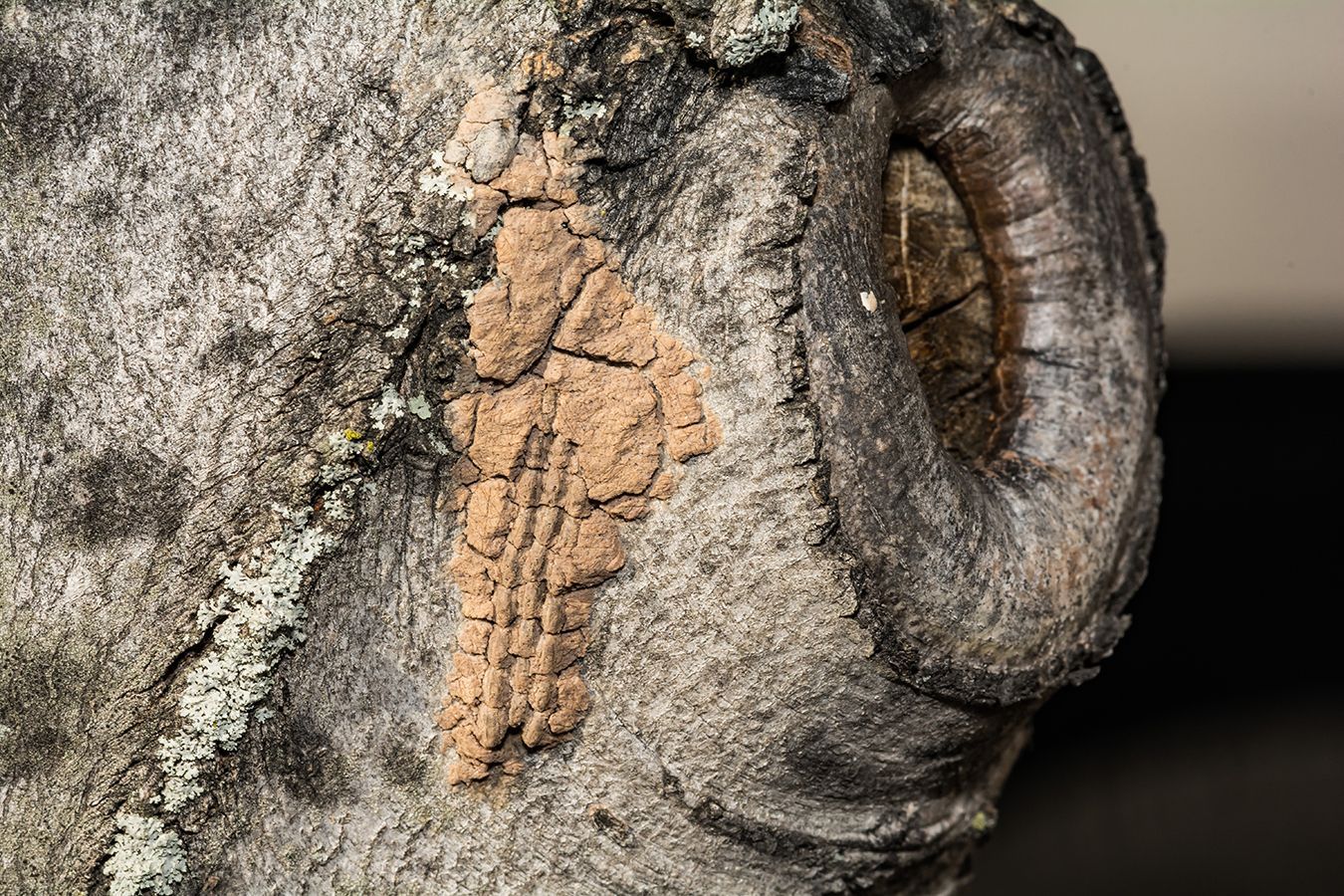
- Egg masses are tan and can contain up to 700 eggs; hatch from late April to early May.
- Preferred hosts: apple, maple, birch, oak, hemlock, spruce, pine, and ash.
- Adult females are white with tan markings and cannot fly; males are brown-gray and fly during the day.
Eastern Tent Caterpillar (Malacosoma americanum)
- Prefers cherry, birch, pear, and crab apple trees.
- Recognizable by silky protective tents in forked branches.
- Larvae are black with a white stripe down the back and grow up to 2¼" long.
Canker Worms (Spring & Fall)
- Feed on new leaves and buds of oak, birch, elm, and apple.
- Descend from treetops on silk threads in search of new feeding sites.
- Weak trees may be vulnerable to secondary pests and Dutch Elm Disease.
- Size: ~1" long.
- Distinction: fall canker worm has three sets of legs; spring canker worm has two.

Common Diseases on Long Island
In addition to insect pressure, Long Island trees are susceptible to fungal and bacterial diseases that can weaken or kill plants if left untreated:
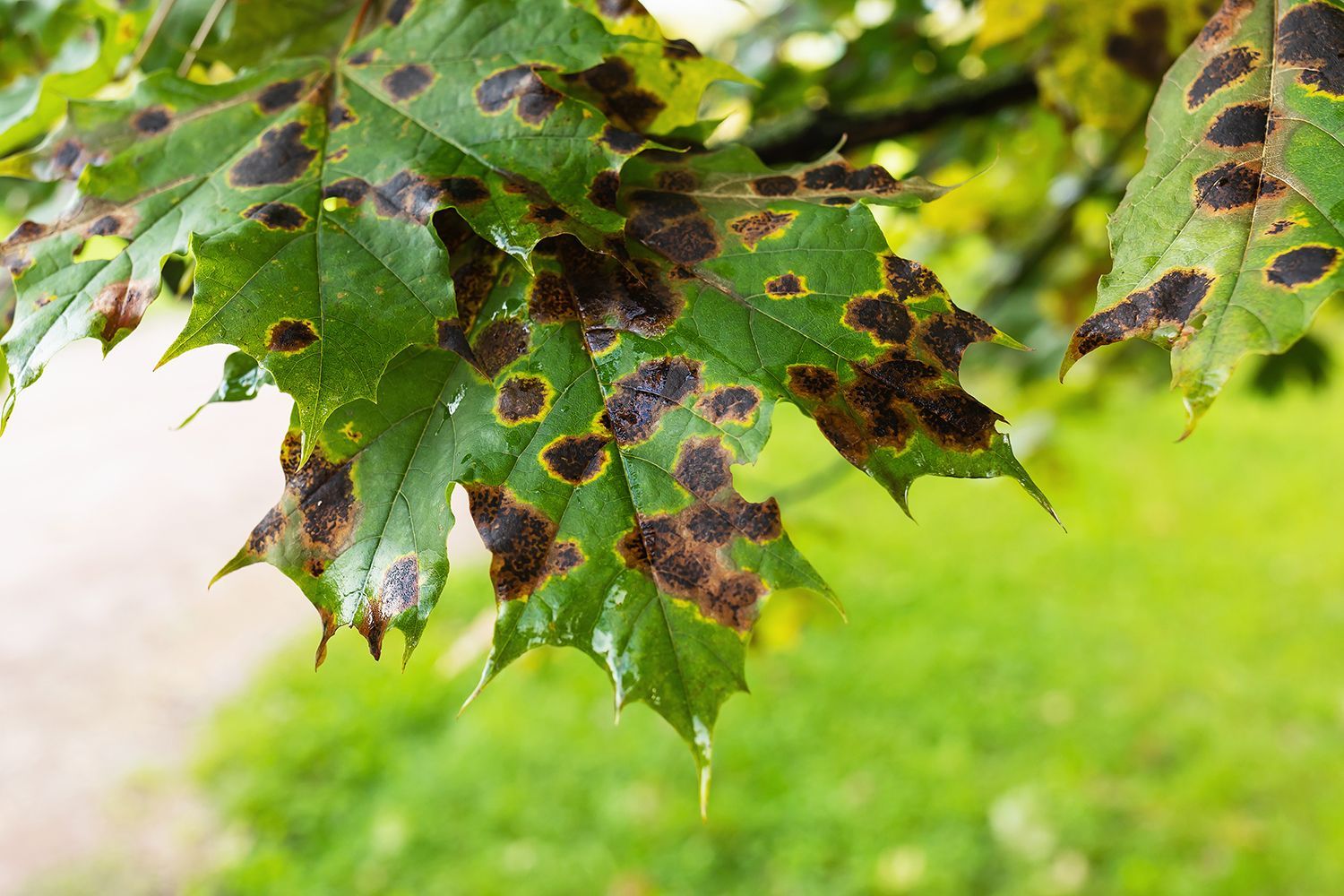
- Leaf Blights & Needle Casts: Cause browning, defoliation, and thinning of foliage.
- Canker Diseases: Localized branch or trunk lesions that can girdle stems and disrupt nutrient flow.
- Root & Collar Rot: Often worsened by poor drainage or soil compaction.
- Secondary Fungal Infections:
Frequently occur after insect feeding or environmental stress weakens plants.
Our Approach to Insect & Disease Management
Regular Property Inspections
Monitoring for insect activity, egg masses, larvae, and early disease symptoms.
Integrated Pest Management (IPM)
Combining biological, cultural, and chemical strategies to minimize environmental impact.
Targeted Treatments
Using organic and EPA-approved products to control pests while protecting beneficial insects and plant health.
Plant Health Support
Fertilization, soil care, and pruning strategies to strengthen plants and reduce future vulnerability.